You Won’t Believe What Linz Hides in Plain Sight
Linz doesn’t scream for attention like Vienna or Salzburg, but that’s exactly why I fell for it. Wandering its streets, I discovered a cityscape where old steel mills meet futuristic art, and quiet riverside paths hide next to buzzing creative hubs. It’s raw, real, and refreshingly unexpected. If you're chasing authenticity over postcard perfection, Linz might just surprise you—like it did me.
First Impressions: A City That Doesn’t Try Too Hard
Arriving in Linz feels less like stepping onto a stage and more like slipping into everyday life. There are no sweeping orchestral fanfares, no throngs of tourists crowding historic squares. Instead, travelers are met with an unvarnished blend of red-brick factories, pastel-painted apartment buildings, and the steady flow of trams gliding along tree-lined avenues. This is a city that wears its history openly, without the polish often found in Austria’s more celebrated destinations. Unlike the imperial grandeur of Vienna or the alpine charm of Salzburg, Linz does not perform. It simply is—honest, grounded, and refreshingly unpretentious.
The contrast with other Austrian cities is immediate. In Vienna, every corner seems curated for admiration; in Salzburg, Mozart’s melodies echo through meticulously preserved lanes. But Linz unfolds block by block, revealing itself gradually to those willing to walk a little farther. Its authenticity lies in the coexistence of old and new—the way a centuries-old church stands beside a sleek glass gallery, or how a former industrial dock now hosts weekend farmers’ markets. This lack of forced spectacle invites deeper engagement, rewarding curiosity over checklist tourism.
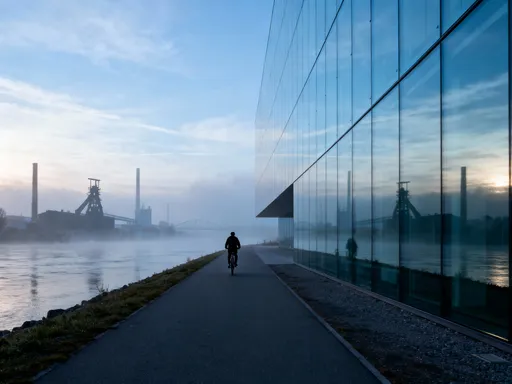
What sets Linz apart is its refusal to sanitize its identity. The remnants of its industrial past—cranes, silos, rust-colored facades—are not hidden but embraced as part of the city’s narrative. At the same time, modern architecture and public art installations weave seamlessly into the urban fabric. This balance creates a sense of continuity, where progress doesn’t erase memory but builds upon it. For visitors seeking a destination that feels lived-in rather than staged, Linz offers a rare kind of welcome—one rooted in sincerity, not showmanship.
The Danube as a Living Backbone
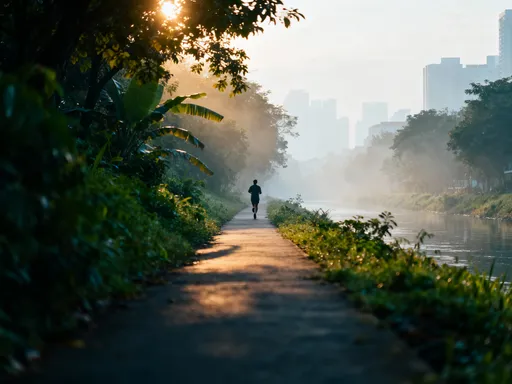
The Danube River doesn’t just run through Linz—it breathes with it. More than a scenic backdrop, the river functions as the city’s living spine, shaping how people move, gather, and unwind. Along its banks, a continuous promenade stretches for kilometers, inviting cyclists, joggers, and strollers alike to slow down and sync with the current. This riverside artery connects neighborhoods, bridges cultures, and offers some of the most tranquil moments in an otherwise vibrant city.
One of the most beloved stretches is the Linz Promenade, a well-maintained path that follows the river’s curve from the city center to the outskirts. Here, mornings begin with the rhythmic thud of running shoes on pavement, the soft chime of bicycle bells, and the occasional bark of a dog chasing a ball into the shallows. By afternoon, families spread blankets on the grassy banks, children splash near shallow edges, and couples sip coffee at waterside cafés where the menu changes with the season—warm apple strudel in winter, chilled elderflower spritzers in summer.
Sunset brings a transformation. The water catches fire with golden reflections, mirroring the sky as boats glide silently past. The sound of the Danube ferry cutting through the current blends with distant laughter and the occasional burst of music from a street performer. It’s during these golden hours that the river reveals its poetic side—calming, reflective, and deeply human. The Danube doesn’t dominate Linz; it harmonizes with it, softening the city’s industrial edges and grounding its modern ambitions in something timeless.
This intimate relationship between city and river is not accidental. Urban planners have long prioritized accessibility, ensuring that nearly every district has a direct connection to the waterfront. As a result, the Danube is not a distant attraction but an integral part of daily life. Whether commuting by bike, meeting friends for a riverside picnic, or simply pausing to watch the clouds drift overhead, residents and visitors alike experience the river as a companion—a constant presence that adds rhythm and serenity to urban living.
From Steel to Art: The Transformation of Urfahr
On the northern bank of the Danube lies Urfahr, a district that embodies Linz’s remarkable evolution from industrial powerhouse to cultural innovator. Once home to sprawling steelworks and chemical plants, this riverside neighborhood has undergone a thoughtful transformation—one that honors its working-class roots while embracing creativity and renewal. Unlike gentrification seen in other cities, where history is erased for luxury developments, Urfahr’s revitalization feels organic, inclusive, and deeply respectful of its past.
The shift began in the late 20th century, as factories closed and the city sought new purposes for abandoned spaces. Rather than demolishing them, Linz chose adaptation. Old warehouses became artist studios, repurposed storage units housed design collectives, and former industrial yards transformed into open-air exhibition spaces. This approach preserved the district’s character—its raw textures, high ceilings, and industrial bones—while infusing it with fresh energy. Today, Urfahr pulses with creativity, hosting galleries, music venues, and community workshops that draw both locals and curious visitors.
At the heart of this cultural renaissance stands the Lentos Art Museum, a luminous glass structure that appears to float above the Danube at night. Its transparent façade reflects the river and sky, shifting color with the weather and time of day. Inside, the museum showcases modern and contemporary art, with rotating exhibitions that challenge and inspire. What makes Lentos particularly striking is how it contrasts with its surroundings—the sleek, futuristic design standing beside weathered brick buildings and rust-colored cranes, a visual metaphor for Linz itself: where grit meets grace, and tradition dances with innovation.
The success of Urfahr lies in its balance. It has not become a sanitized art enclave but remains a living neighborhood where artists, families, and long-time residents coexist. Cafés serve both espresso and hearty Austrian stews; street art covers walls once marked by factory notices; and weekend markets feature handmade crafts alongside local produce. This blend of authenticity and creativity makes Urfahr not just a destination, but a model for urban renewal—one that proves transformation doesn’t require erasure.
Hidden Layers: Rooftop Views and Quiet Alleys
Beyond the main thoroughfares and well-marked attractions, Linz reveals its most intimate secrets to those who wander with intention. Tucked away from guidebooks and tour groups are quiet courtyards, forgotten staircases, and rooftop vantage points that offer a different perspective—one of stillness amid motion, of light playing across stone, of the city breathing in its quieter moments.
One such gem is the rooftop terrace of the Ars Electronica Center, known as the “Museum of the Future.” By day, the building’s silver exterior gleams like a spaceship landed beside the Danube. But it’s at dusk that the rooftop truly comes alive. Accessible during evening events or special viewings, it offers a panoramic vista of the city—church spires piercing the twilight, bridges glowing like necklaces, and the river shimmering below. From this height, Linz feels both expansive and intimate, a tapestry of old and new stitched together by water and light.
Equally enchanting are the hidden alleys of the old town, where cobblestone lanes twist between centuries-old buildings. In one such courtyard, behind an unmarked wooden door on Landstraße, ivy climbs the walls of a former merchant’s house. A wrought-iron bench sits beneath a ginkgo tree, its leaves turning gold in autumn. Here, the noise of the city fades, replaced by the rustle of leaves and the occasional chime of a distant clock tower. These pockets of quiet are not designed for tourists—they exist because Linz allows space for stillness, for moments of reflection amidst urban energy.
Another lesser-known spot is the staircase leading up to the Pöstlingberg from the Johanneskirche stop. While many take the historic tram, those who climb on foot are rewarded with unexpected views—laundry fluttering between balconies, flower boxes bursting with color, and glimpses of the city unfolding below. These micro-moments, easily missed, are what make Linz so memorable. They remind visitors that discovery isn’t always about grand landmarks, but about the quiet details that reveal a city’s soul.
The Pulse of Public Spaces: Hauptplatz and Beyond
No visit to Linz is complete without spending time in the Hauptplatz, the city’s central square and communal heart. Unlike the vast, awe-inspiring plazas of other European capitals, Linz’s main square is modest in size but rich in rhythm. It doesn’t overwhelm with scale but welcomes with warmth, functioning less as a monument and more as a living room for the city.
On market days, the square comes alive with wooden stalls selling regional cheeses, honey, fresh bread, and seasonal fruits. Farmers from surrounding villages set up their wares under striped awnings, offering samples with a smile. The scent of roasted chestnuts drifts through the air in winter, while in summer, the buzz of conversation blends with the clink of coffee cups at outdoor cafés. Children chase pigeons, seniors play chess under linden trees, and street musicians add a soundtrack that shifts from classical guitar to jazz depending on the hour.
What makes the Hauptplatz special is its integration into daily life. Locals don’t just pass through—they linger. They meet friends for a midday break, read newspapers on sun-dappled benches, or wait for the tram while sipping a quick espresso. The square is not preserved behind velvet ropes but used, loved, and slightly worn—its cobblestones smoothed by generations of footsteps. This authenticity sets it apart from more tourist-centric plazas, where the energy feels performative rather than organic.
Thoughtful urban design enhances this sense of connection. Benches are placed to catch morning sun, trees provide shade in summer, and the surrounding buildings—historic yet functional—house bookshops, bakeries, and small galleries. Even the fountain at the center, topped with a bronze figure of St. Mary, serves as a meeting point rather than just decoration. The Hauptplatz proves that great public spaces aren’t about size or splendor, but about fostering human connection in a way that feels natural and inclusive.
Night Lights: When the City Turns Electric
As daylight fades, Linz undergoes a subtle but magical transformation. The city doesn’t shut down—it illuminates. Where daytime reveals Linz’s architectural layers, nighttime adds emotion, turning streets, bridges, and buildings into a canvas of light and shadow. This is when the city’s quieter charm gives way to a gentle drama, where functional spaces become poetic.
One of the most enchanting experiences is walking the illuminated trail up to Pöstlingberg. The historic mountain pilgrimage site glows with thousands of tiny lights that trace pathways, outline shrines, and highlight the silhouette of the basilica against the night sky. Families, couples, and solo hikers make the climb—some by foot, others by the nostalgic tram—and are rewarded with a breathtaking view of Linz spread below, its bridges lit like ribbons across the dark river.
Throughout the city, lighting is used with intention. The Nibelungen Bridge, a key crossing over the Danube, is softly lit in warm white tones, its arches reflecting perfectly in the water. At the Ars Electronica Center, the façade becomes a dynamic screen for digital art installations, where abstract patterns, moving images, and interactive displays transform the building into a nightly performance. These light shows, often inspired by themes of technology and humanity, reflect Linz’s identity as a city that embraces innovation without losing its soul.
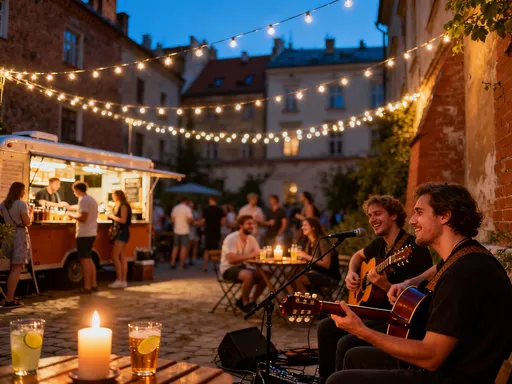
Even ordinary spaces gain new life after dark. The Promenade along the river is lined with subtle path lighting, guiding evening strollers through a serene landscape. Waterside cafés hang string lights above their terraces, creating cozy pockets of warmth. In the old town, historic buildings are gently uplit, their facades revealing details invisible in daylight—the curve of a gargoyle, the texture of weathered stone, the intricate ironwork of a balcony. This thoughtful use of illumination doesn’t overpower but enhances, proving that beauty can be subtle, and that a city’s magic often emerges not in the sun, but in the quiet glow of night.
Why Linz Stays With You
Linz doesn’t announce itself with fanfare, nor does it demand to be loved. It reveals itself slowly, in moments—a reflection in the Danube, a conversation over coffee in the Hauptplatz, the hush of a hidden courtyard. And yet, long after the journey ends, it lingers. Not as a collection of sights checked off a list, but as a feeling: of having been somewhere real, somewhere that exists for itself, not for visitors.
In a travel landscape dominated by overhyped destinations and picture-perfect backdrops, Linz stands apart. It doesn’t perform. It doesn’t try to be what others expect. Instead, it offers something rarer—a balance of innovation and intimacy, of industry and art, of movement and stillness. It’s a city where the past isn’t buried but woven into the present, where creativity thrives in unexpected places, and where public spaces feel lived-in rather than staged.
What makes Linz unforgettable is its invitation to explore at your own pace. There’s no rush, no pressure to see it all. Instead, it rewards curiosity, patience, and the willingness to look beyond the obvious. Whether you’re standing on a rooftop watching the city glow at dusk, sipping tea in a quiet café beside a centuries-old church, or simply walking along the river as the ferry passes by, Linz offers moments of quiet revelation.
For the thoughtful traveler—the one who values authenticity over spectacle, depth over dazzle—Linz is a quiet revelation. It doesn’t shout. It whispers. And in doing so, it leaves a lasting impression, not because it tried to impress, but because it simply allowed you to see it, as it is.